World Pipelines Magazine, the right location
Mehdi M. Laichoubi and Sylvain Decombe, SKIPPER NDT, France, discuss the use of magnetic technology to locate and map buried steel pipelines.
News
News




[Abstract]
World Pipelines Magazine, the right location
Buried pipelines are the most secure and efficient mean to transport vital resources for our communities. A precise mapping of such infrastructures is a critical input to Geographic Information Systems (GIS) used to ensure the safety and integrity of these networks. The safety impact of such an information is twofold: prevent any threat due to third party excavations, and monitor any ground movement on unstable slopes (landslides) that could affect the pipeline structure.
According to the 2019 Common Ground Alliance report1 , which promotes effective underground infrastructure damages prevention, incidents are on the rise and reached an all-time high. In 2019 a total of 532 000 excavation-related damages to underground facilities were recorded in the US alone, representing a 4.5% increase compared to the 2018 estimate. The human, environmental and financial costs of these incidents are significant. In the US, over a 10 year period, third-party damage on gas networks caused 363 fatalities, 1392 injuries and US$800 billion in financial losses. Damages to buried pipeline due to third party intervention are a global concern. In Belgium, an excavator’s impact on a buried gas pipeline resulted in an explosion two weeks later, with a high number of casualties, 24 dead and 132 seriously injured. Addressing the challenge of third-party damages to buried infrastructures is a pressing issue for operators and regulators. Some countries have started to enforce stringent legal requirements.
In France, a government decree2 mandates operators to map critical pipelines, at a precision of at least 40 cm laterally (X,Y) and vertically (Z). SKIPPER NDT has developed a buried pipeline positioning technology using magnetic mapping. This solution, which combines magnetometry and topography measurements, provides significant competitive advantages compared to existing tools in terms of:
- Data accuracy: proprietary algorithms automatically process the acquired data, minimising human error and measurement bias.
- Continuous measurement: data is acquired continuously along the right-of-way. It ensures that no area of interest is missed thanks to a high-resolution magnetic view of the pipeline and its underground environment. This is especially useful in the case of pipeline intersections.
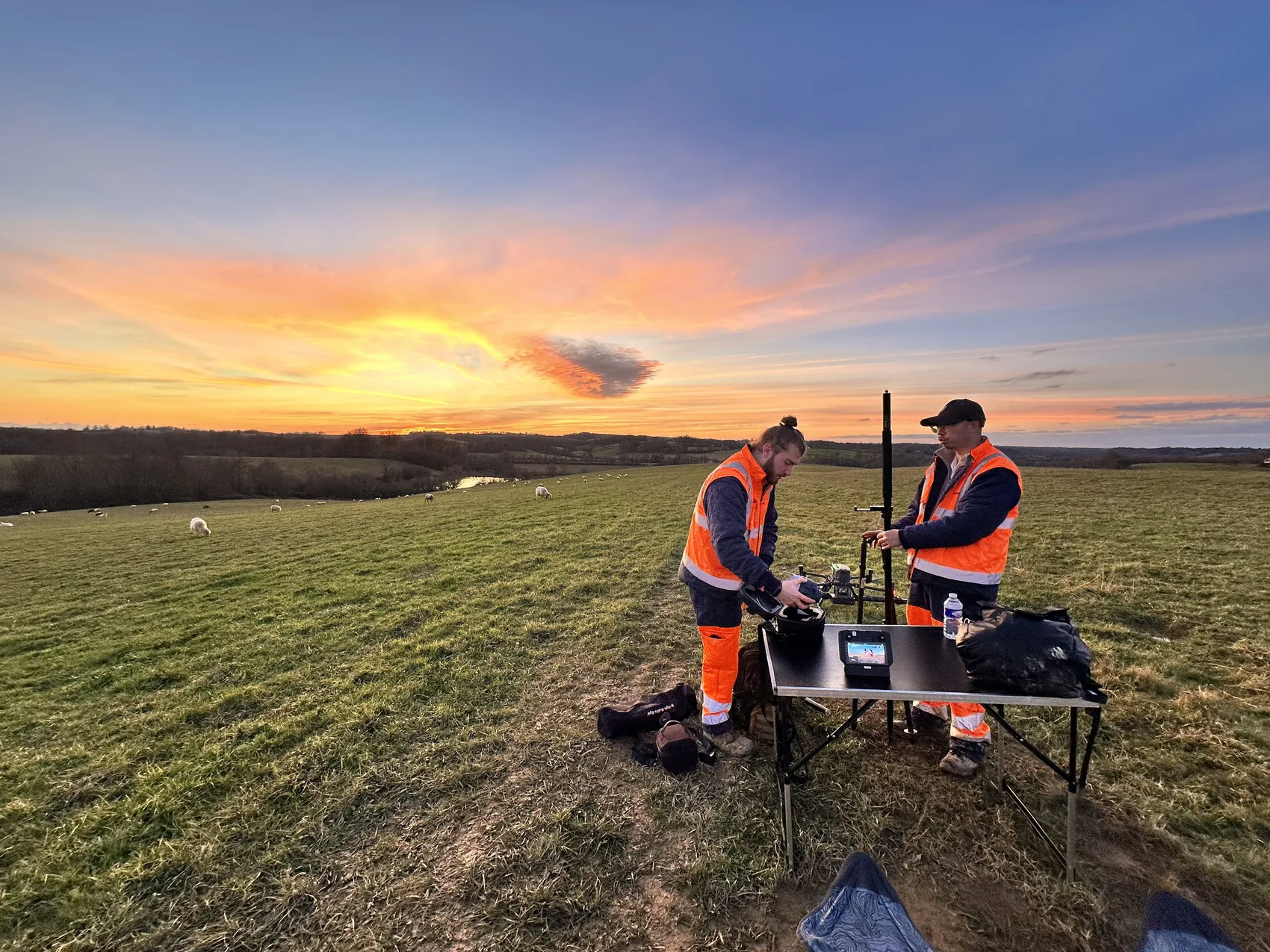
- Operator safety and field accessibility: the versatility of our equipment and detection methods allows UAVbased inspections on previously inaccessible locations while ensuring the field operator safety.
[Full article]
Request the full article
Fill in the form below and the Skipper NDT team will send you the complete article by email.
Let’s Discuss Your Integrity Challenges
Whether you are assessing a specific asset, exploring new inspection approaches, or evolving an integrity management program, Skipper NDT’s team is ready to support your objectives.